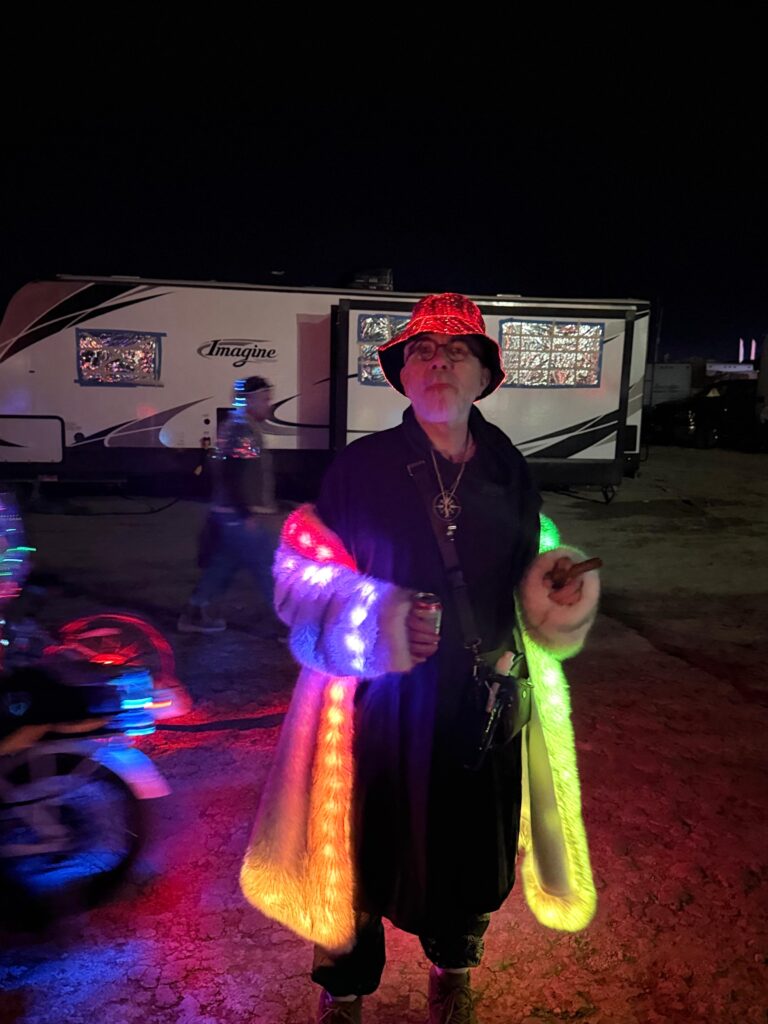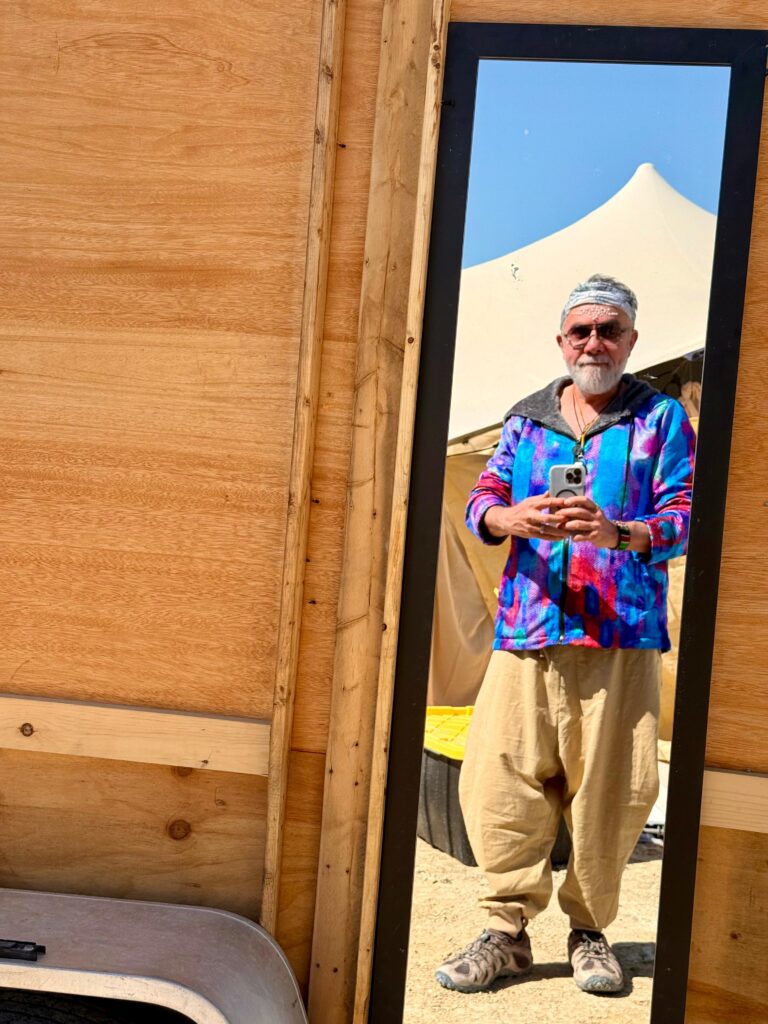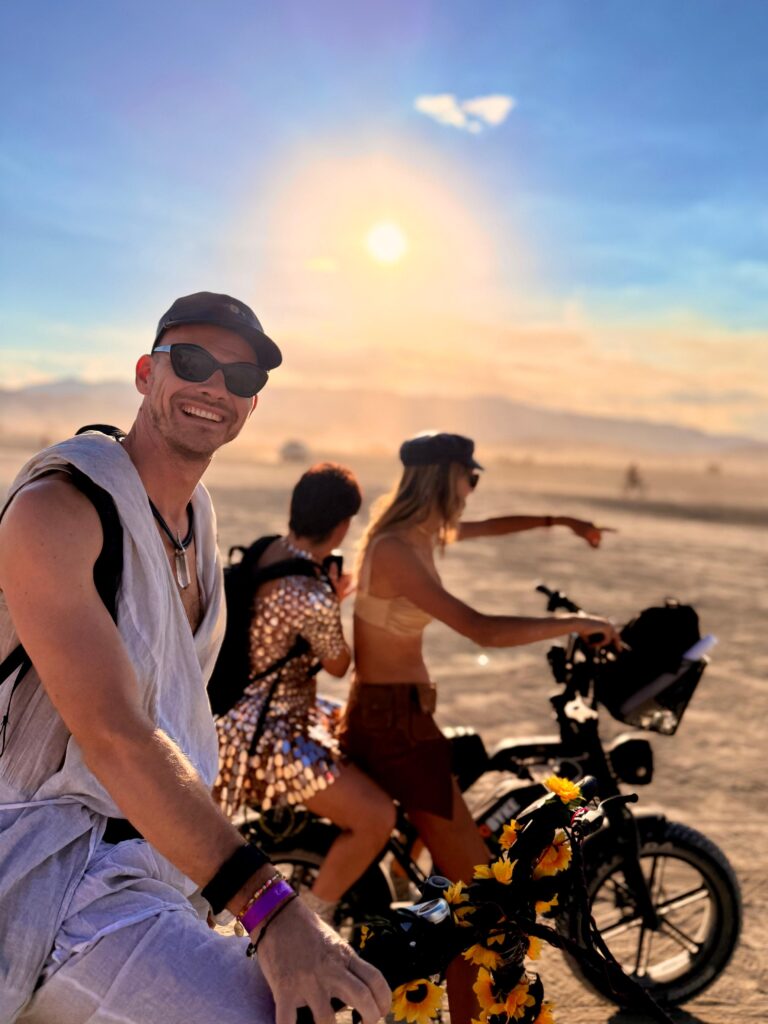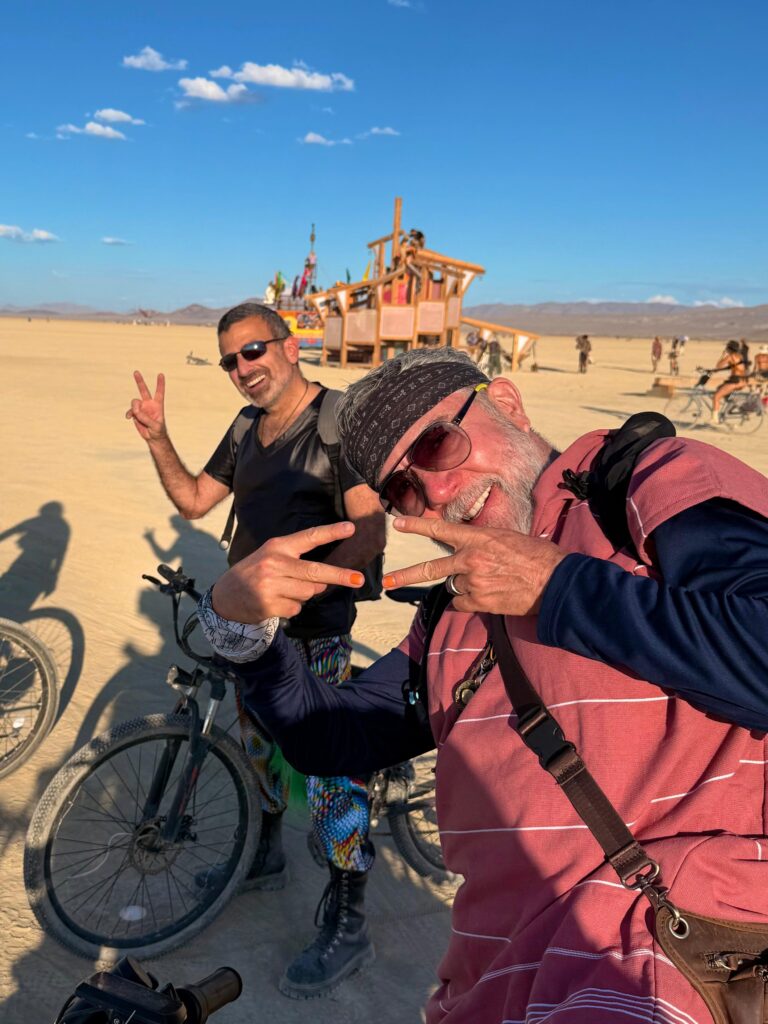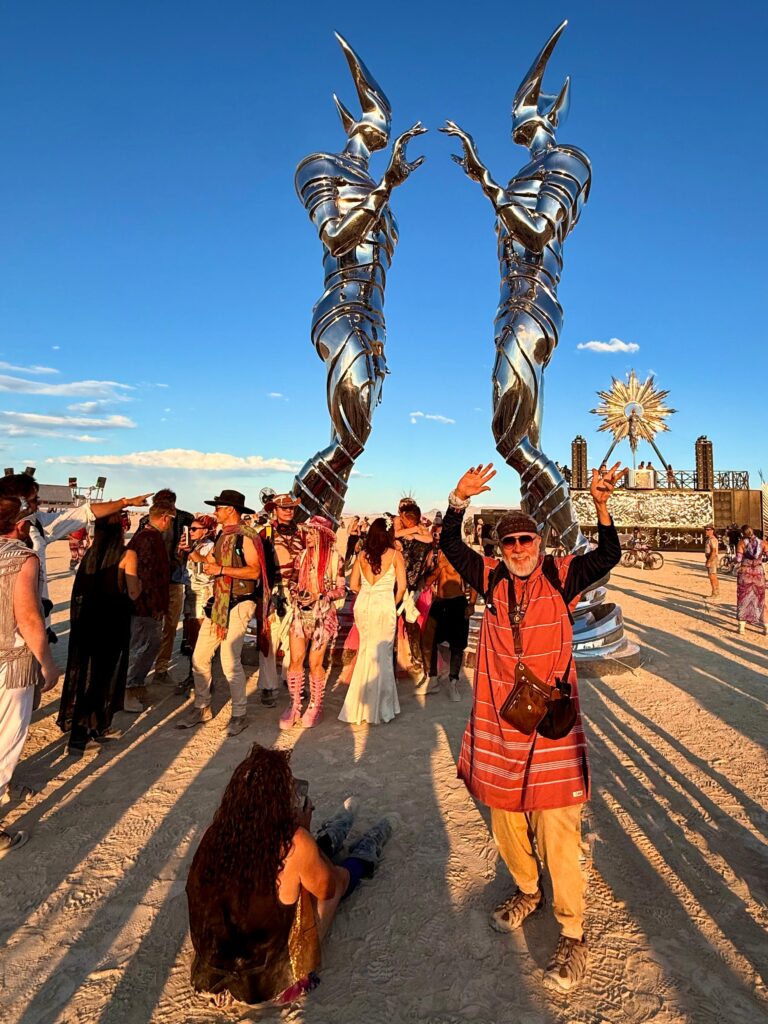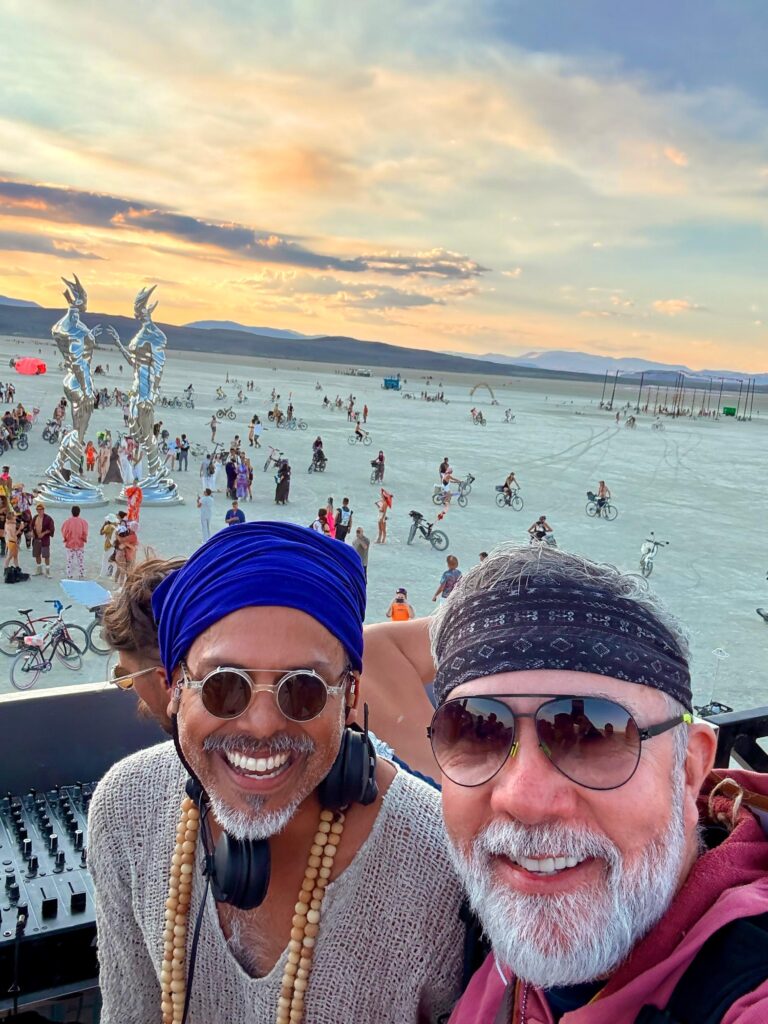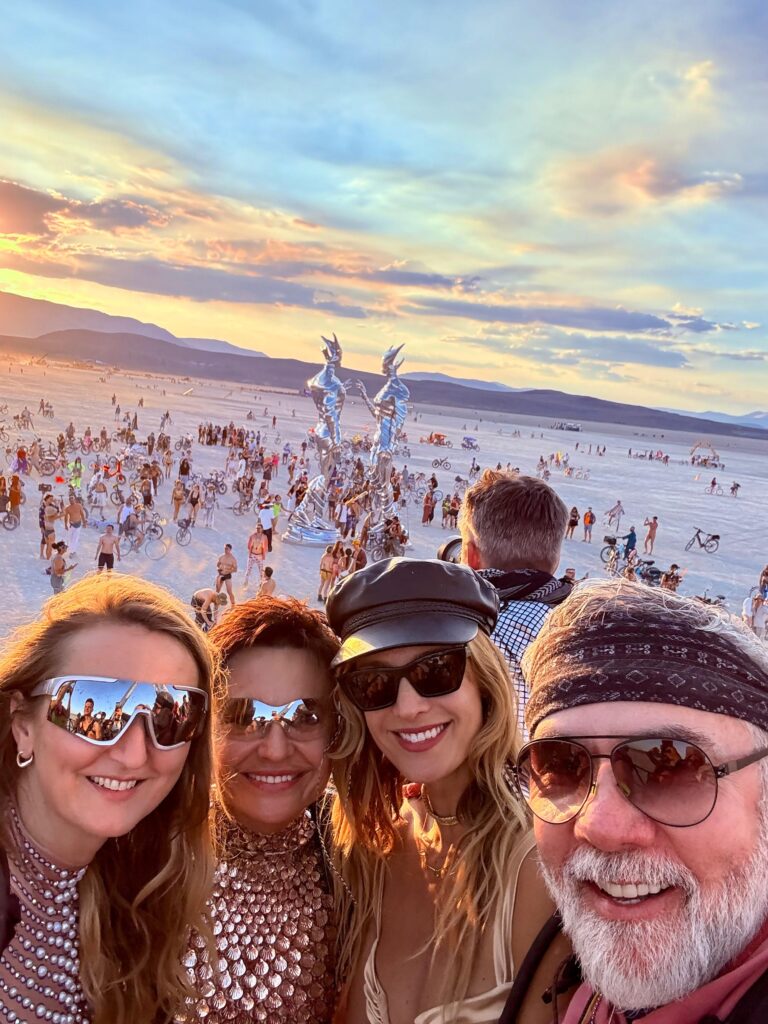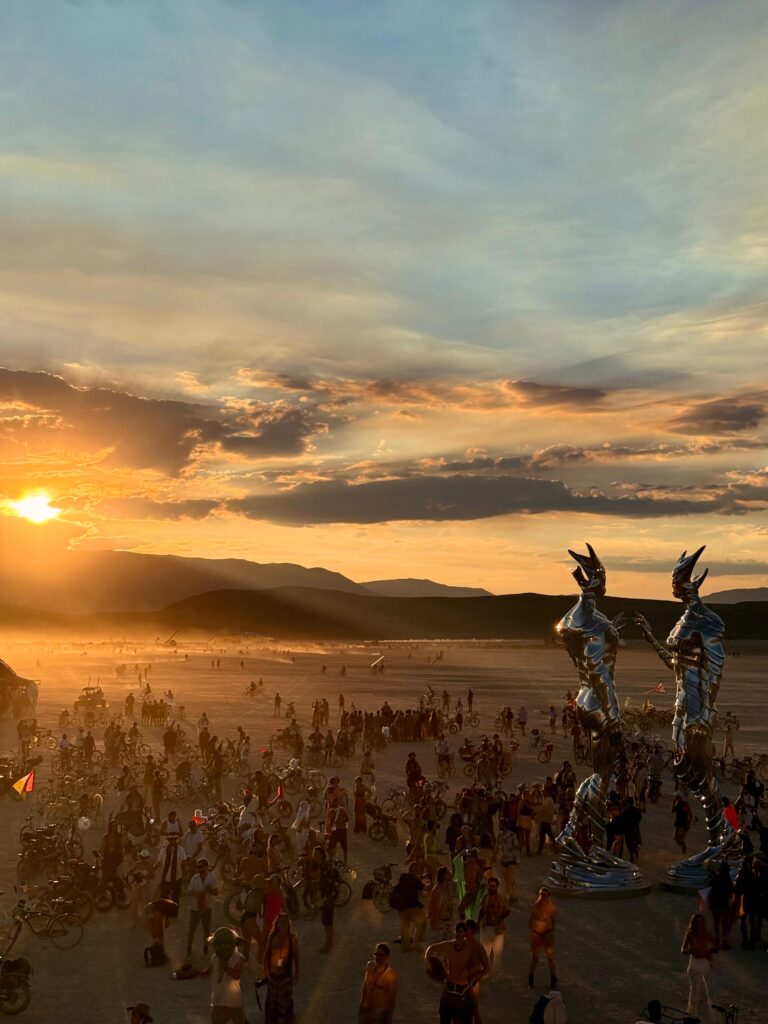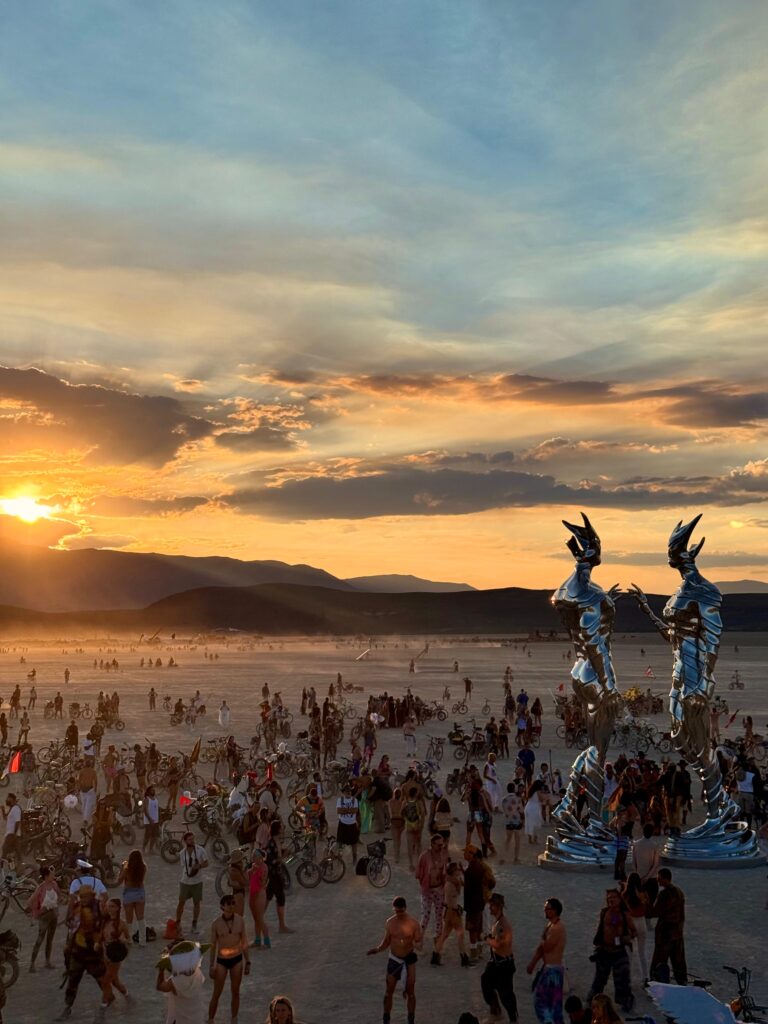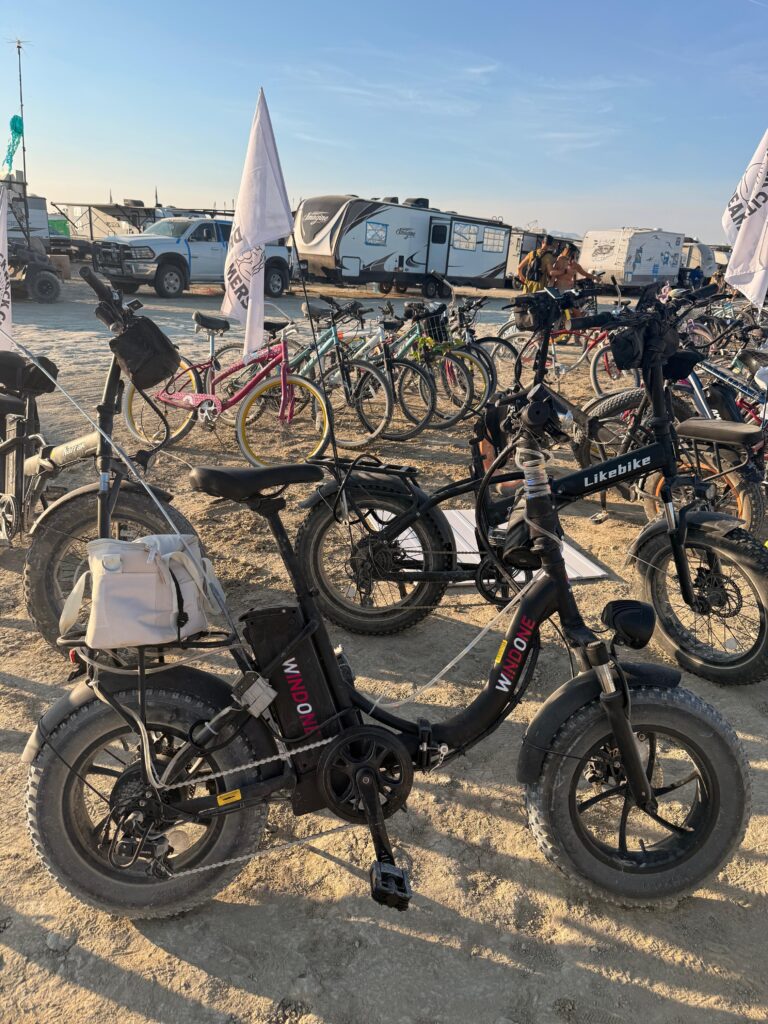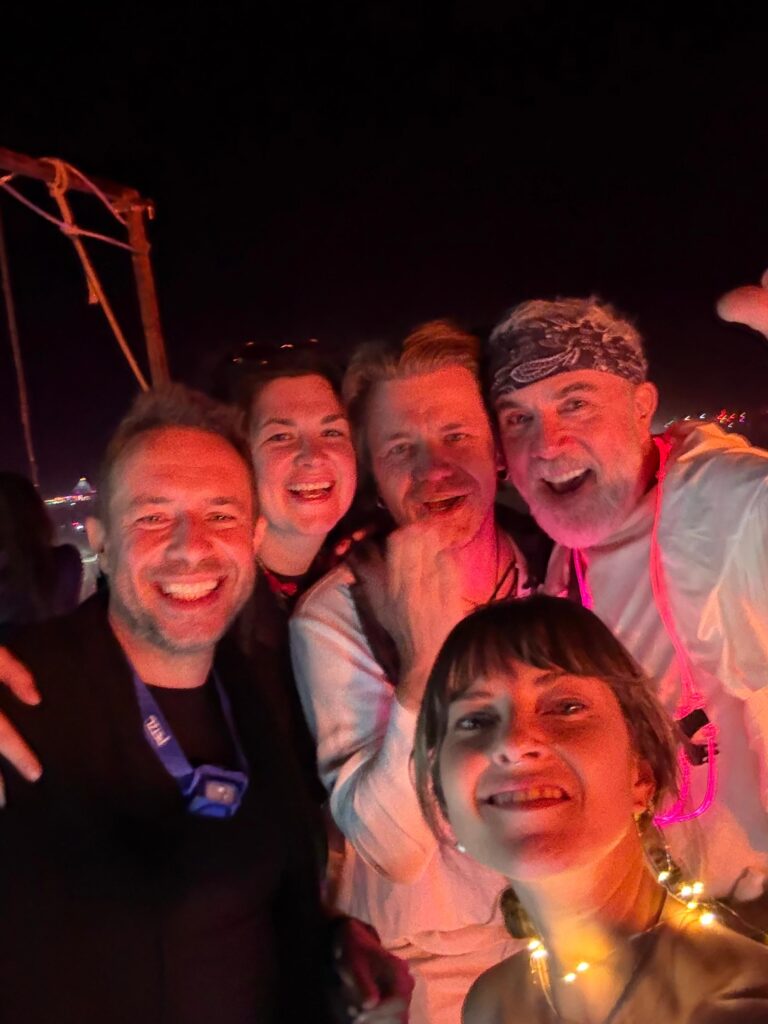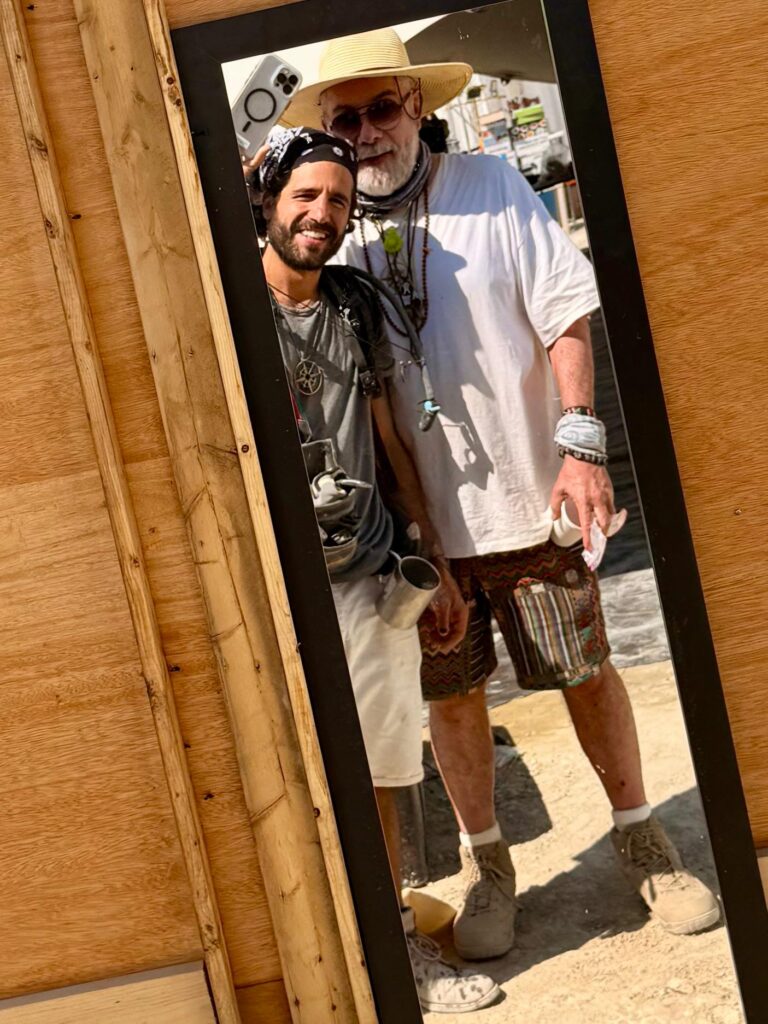
 I start typing with an overwhelming sense of defeat. Not because the trip I’m about to describe — at the end of August — went badly, but because it feels almost impossible to put into words what I experienced there. No adjective seems big enough to capture what it truly means to live “Burning Man.” Words aren’t enough — neither are photos or videos.
But let’s start from the beginning.
The trip first took shape last November, as we crossed the Atlantic from Lisbon to San Juan. Over lunch, I found myself in the company of Kay Morrison — a luminous soul with an easy smile and endless stories. It was she who brought to the surface something my subconscious had been harboring for at least a decade: a place in the middle of the Nevada desert, in the United States, that exists for just over a week each year before disappearing without a trace. Literally — as my grandchildren would say — without a trace.
To my good fortune, Kay — a well-known facilitator in Seattle’s arts community — sits on the board of directors of this mysterious enclave. The name of this temporary, crescent-shaped city is Black Rock City. It’s born, it dies, and then it’s born again — a social experiment that’s been challenging our understanding of community, art, and freedom for more than three decades.
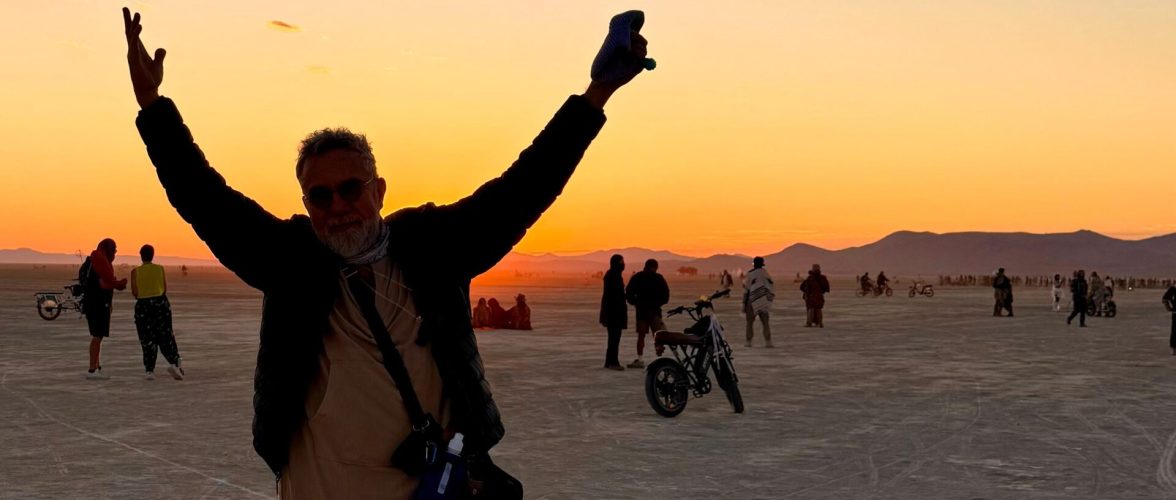
It may sound strange that I call it a “city,” but the numbers speak for themselves. In 2025, more than 80,000 people lived together within this 12-kilometer space. Thousands of bicycles, hundreds of art cars, and more than 4,000 scheduled events. And something truly incredible: an economy without money, built entirely on giving. Everything is shared — nothing is sold — except for ice.
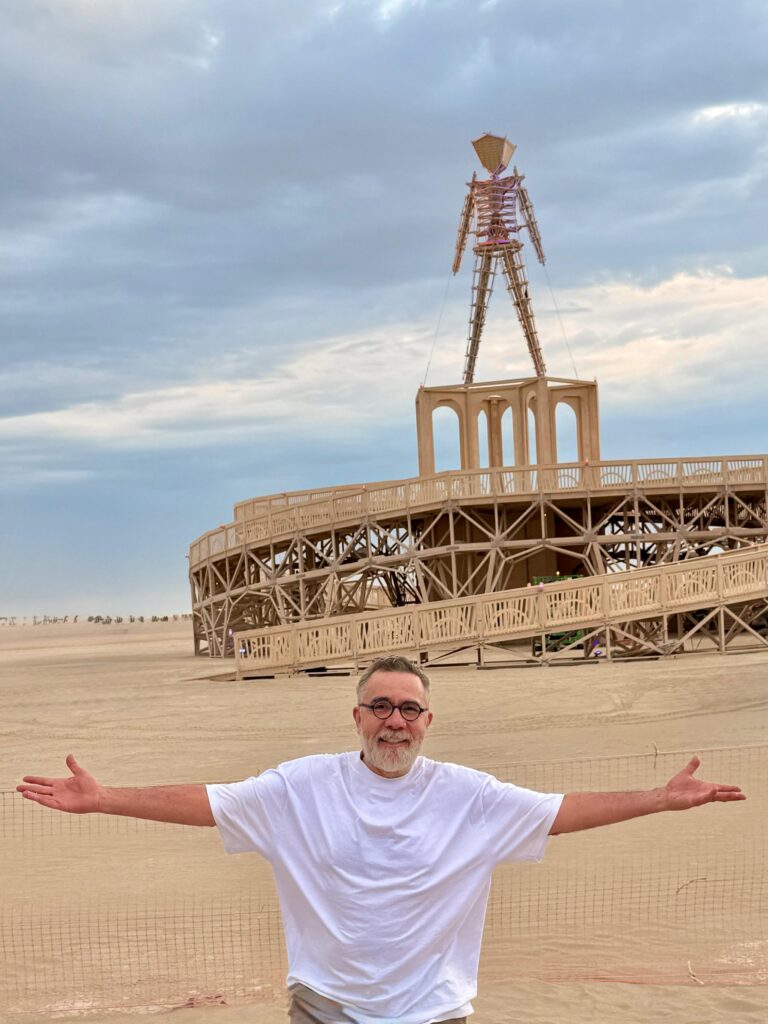
Polaris and the Desert
The seven-hour line to get in was our first contact with the dust — that fine, white dust that would accompany us for the next nine days, invading everything: our pores, our food, our conversations, our clothes… even our dreams.
You imagine the desert will be harsh, but you don’t really understand how harsh until you live it. Nothing escapes the sand — not even the soul. And just when you think you’ve understood something, the desert takes it from you again. I’ve never experienced such brutal storms: winds that bent and twisted metal structures, rains that turned the ground to mud, thunder that truly shook the earth.
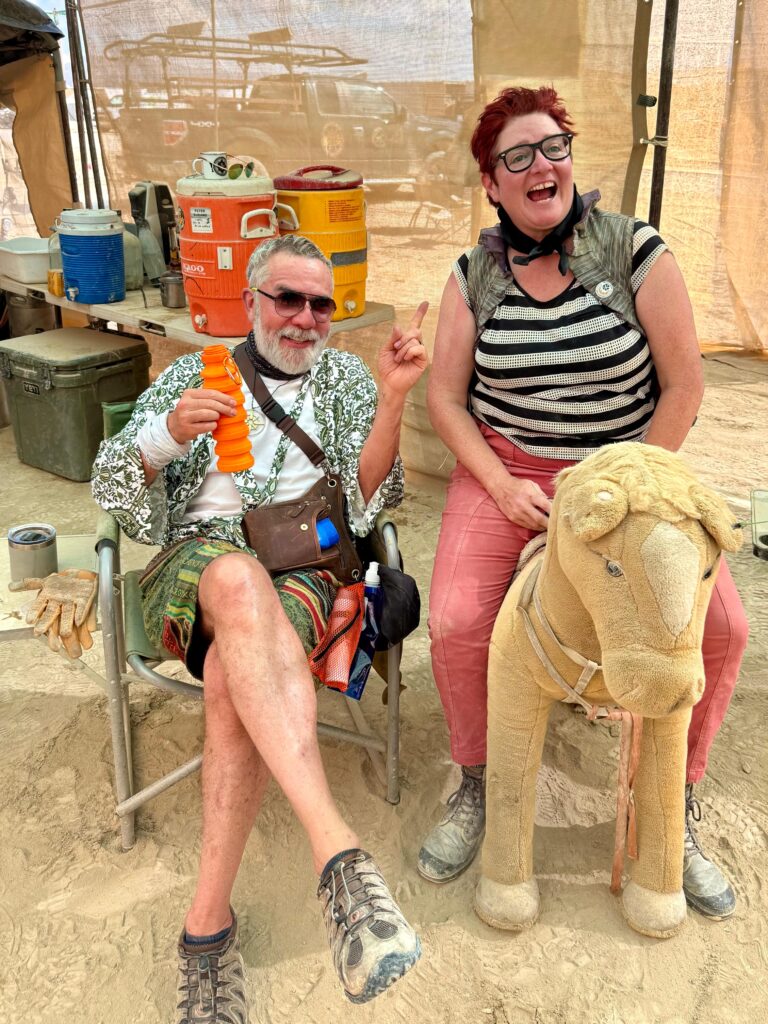
The camp where I landed, among the thousands spread across the playa, was called Polaris. About 75 of us gathered there, including a Costa Rican grandfather and people from Portugal, France, Austria, Romania, Lebanon, Germany, and Slovakia — a true “Babel bubble” of accents and stories.
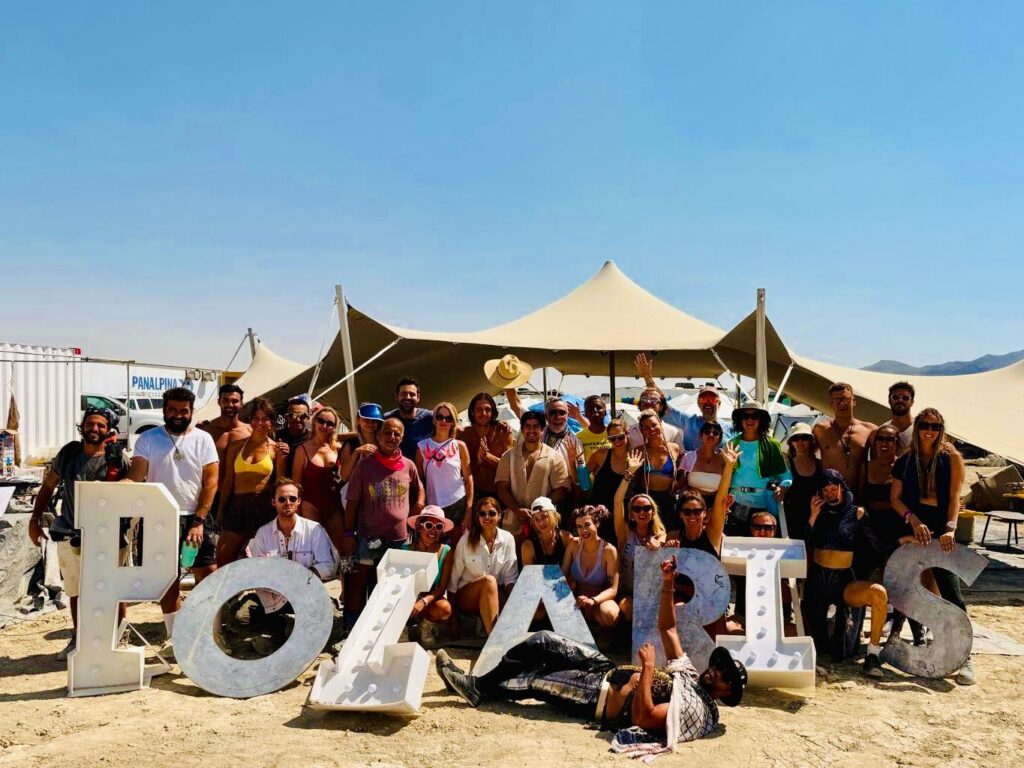
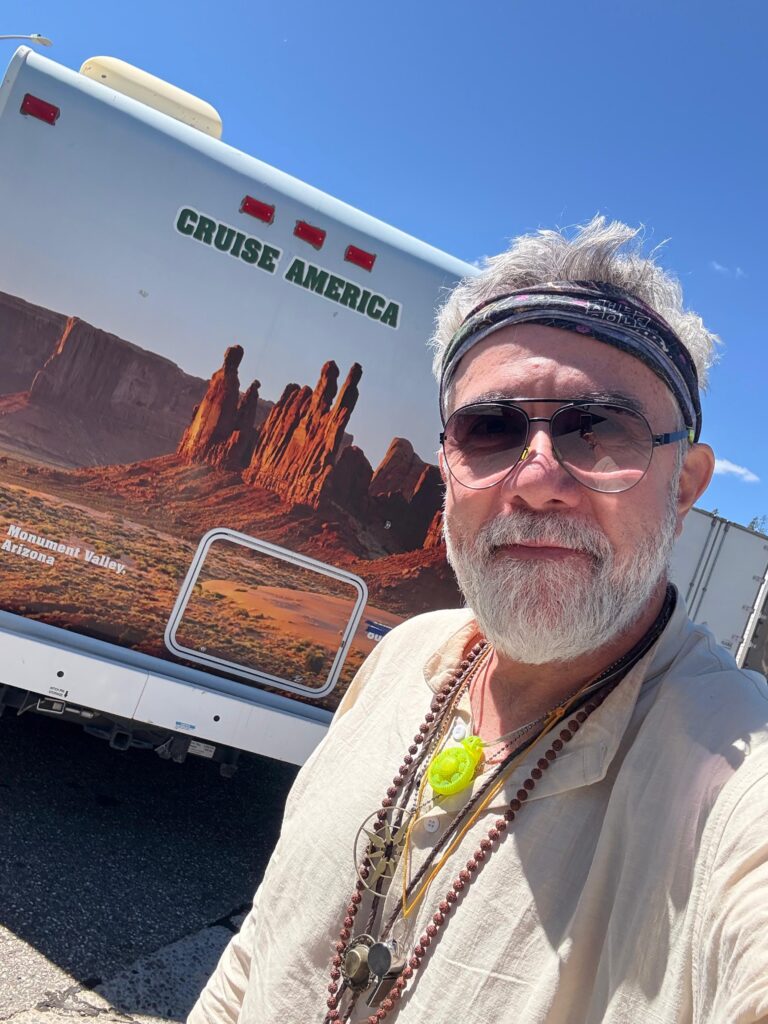
By coincidence — or fate — my RV was parked right next to the common area. That little detail turned out to be meaningful, as it later became an impromptu refuge, a command post in moments of crisis, and even, at times, a kind of confessional.
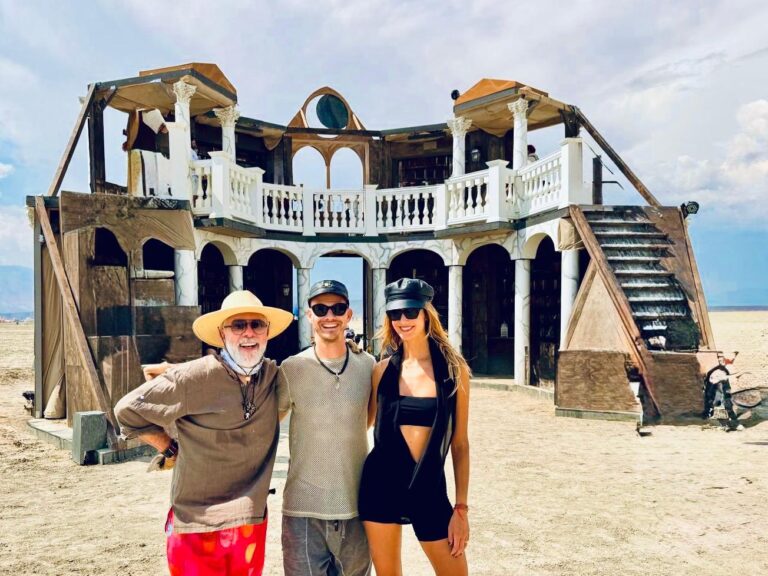
A quick aside: in the desert, there are no sewers, no streetlights, no running water, no permanent buildings. Anything you associate with a city simply doesn’t exist there. Until we arrive, it’s nothing but barren desert.
Naturally, once settled in, we at Polaris tried to get organized. But no one said it would be easy. The first few days tested us with relentless wind and dust storms, pounding rain, and lightning that tore the sky in two. Tension flared — as it does when heat, cold, fatigue, and different leadership styles collide. But out of the apparent chaos, a sense of community eventually emerged. Facing hardship together always forges bonds — sisterhood, brotherhood, something beyond words.
The Ten Principles of Burning Man
The event is guided by ten principles — not commandments, but rather a kind of ethical compass, created by its founders to help everything work in harmony. In their own way, each one represents a form of detachment — a way of letting go of ego, judgment, past, and future — so you can simply be, live, and feel.
They are:
- Radical Inclusion – Everyone is welcome. All you need is a ticket. This leads to encounters with people from every walk of life.
- Gifting – The foundation of the event’s economy: giving freely, without expecting anything in return.
- Decommodification – A rejection of commercial culture. Nothing is for sale (except ice and soft drinks, whose proceeds go to non-profits).
- Radical Self-Reliance – Encouraging participants to discover and depend on their own inner and outer resources. You must bring everything you need to survive ten days in the desert.
- Radical Self-Expression – Freedom to express yourself in any way you choose — even if that means walking around completely naked.
- Communal Effort – Setting aside individualism in favor of collaboration and cooperation.
- Civic Responsibility – Respecting the law, taking care of shared spaces, and owning your actions.
- Leave No Trace – When it’s over, nothing remains. Not a single trace. It takes immense collective effort to achieve this.
- Participation – Don’t just watch — be part of it. Participation is the heartbeat of Burning Man.
- Immediacy – Living in the present moment — reconnecting with yourself and with reality through direct experience.
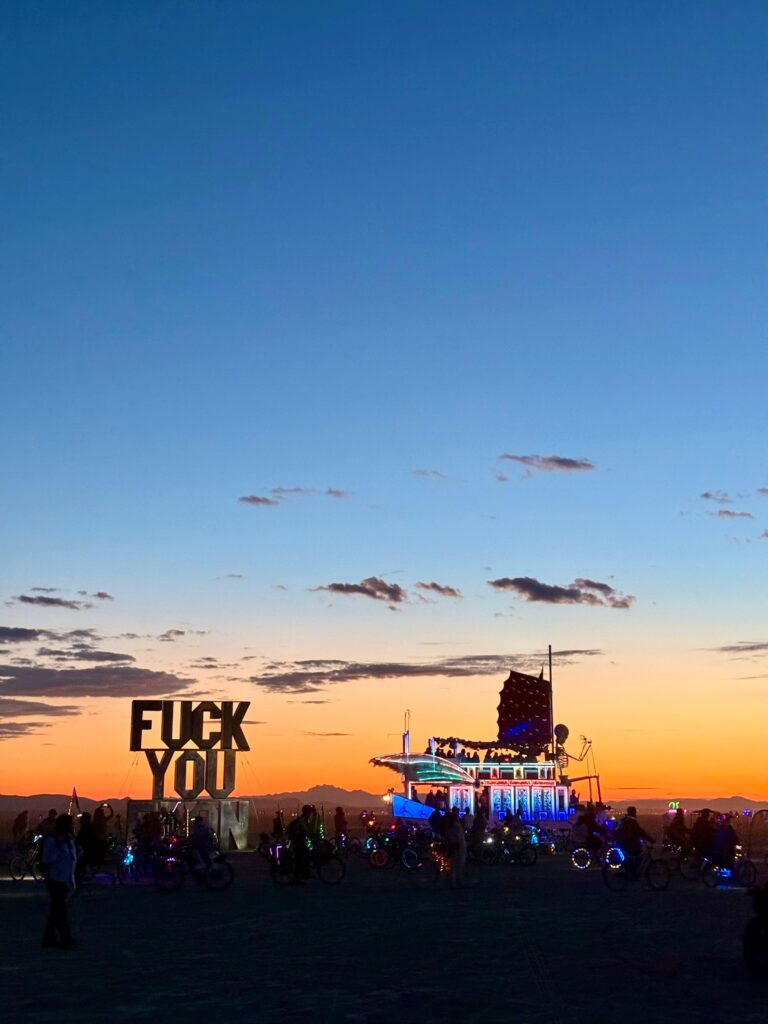
Detachment and Fire
I’ve lived many experiences in my ongoing attempt to break out of old molds — many of them shared here in this blog — but perhaps Burning Man has been the most powerful expression of the art of letting go that I’ve ever witnessed.
In the desert, you feel as if you’ve stepped into a Mad Max movie. Everything is temporary. Everything built there in a matter of days is done with the full awareness that it will soon be taken down, that nothing will remain. It’s a celebration that embraces its own ending.
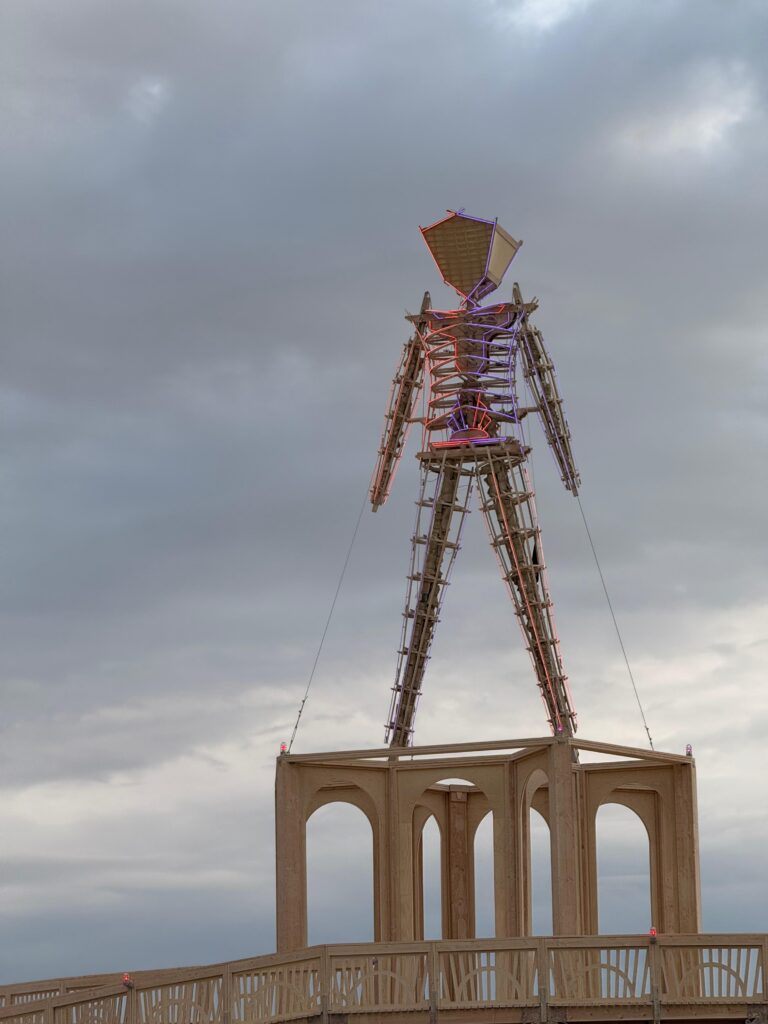
For those who don’t know, the event’s name comes from the ritual at its core: the burning of a gigantic wooden sculpture — the Man — followed the next night by the burning of a wooden temple.
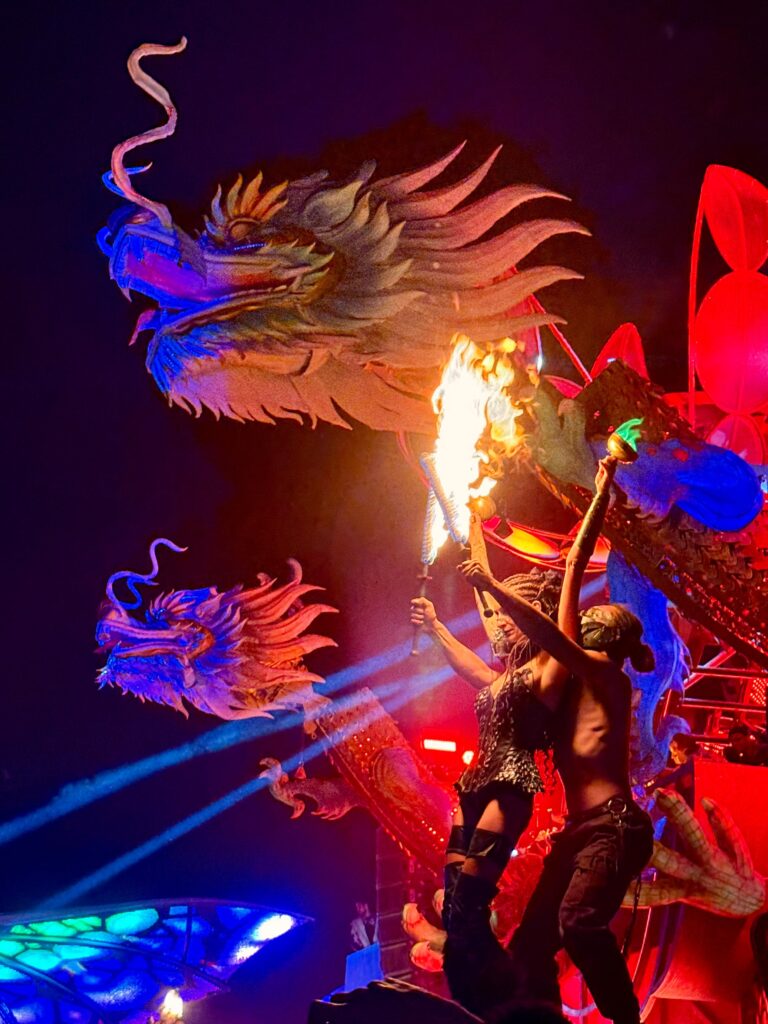
The Burning of the Man is absolutely breathtaking. It unfolds amid a fireworks show unlike anything I’ve ever seen — explosions of color and sound that light up the faces of thousands, symbolizing purification and rebirth.
The Burning of the Temple, in contrast, happens in total silence. It’s a collective farewell, a ritual dedicated to those who’ve passed. Inside the temple are notes, photos, and mementos left throughout the week. Its burning represents release, renewal, and connection. This year’s temple was designed by Spanish-Latin architect Miguel Arraiz.
Both burnings are overwhelming — I swear, truly overwhelming. They’re not events to be described but to be lived. If, at the beginning, I said words aren’t enough, this is exactly why.
Even now, as I write these lines in early November, I still catch myself closing my eyes, seeing the Man go up in flames, and feeling my soul open — just a little more.